


Kalonji Seeds 100g (Hand-cleaned, Hygienically Packed)
Kalonji Seeds 100g (Hand-cleaned, Hygienically Packed)
Free Shipping on orders above ₹499
Low stock: 5 left
Couldn't load pickup availability
- Farm to your Family
- 100% Herbal & Chemical-Free
- Fast & Secure Delivery
Share


Collapsible content
Product Description
For centuries, Kalonji Seeds (Nigella sativa) have been an essential ingredient in Indian kitchens, Ayurvedic traditions, and Middle Eastern cuisine. Known for their distinctive peppery flavour and versatility, these tiny black seeds are valued not only as a culinary spice but also for their nutritional profile and traditional wellness uses.
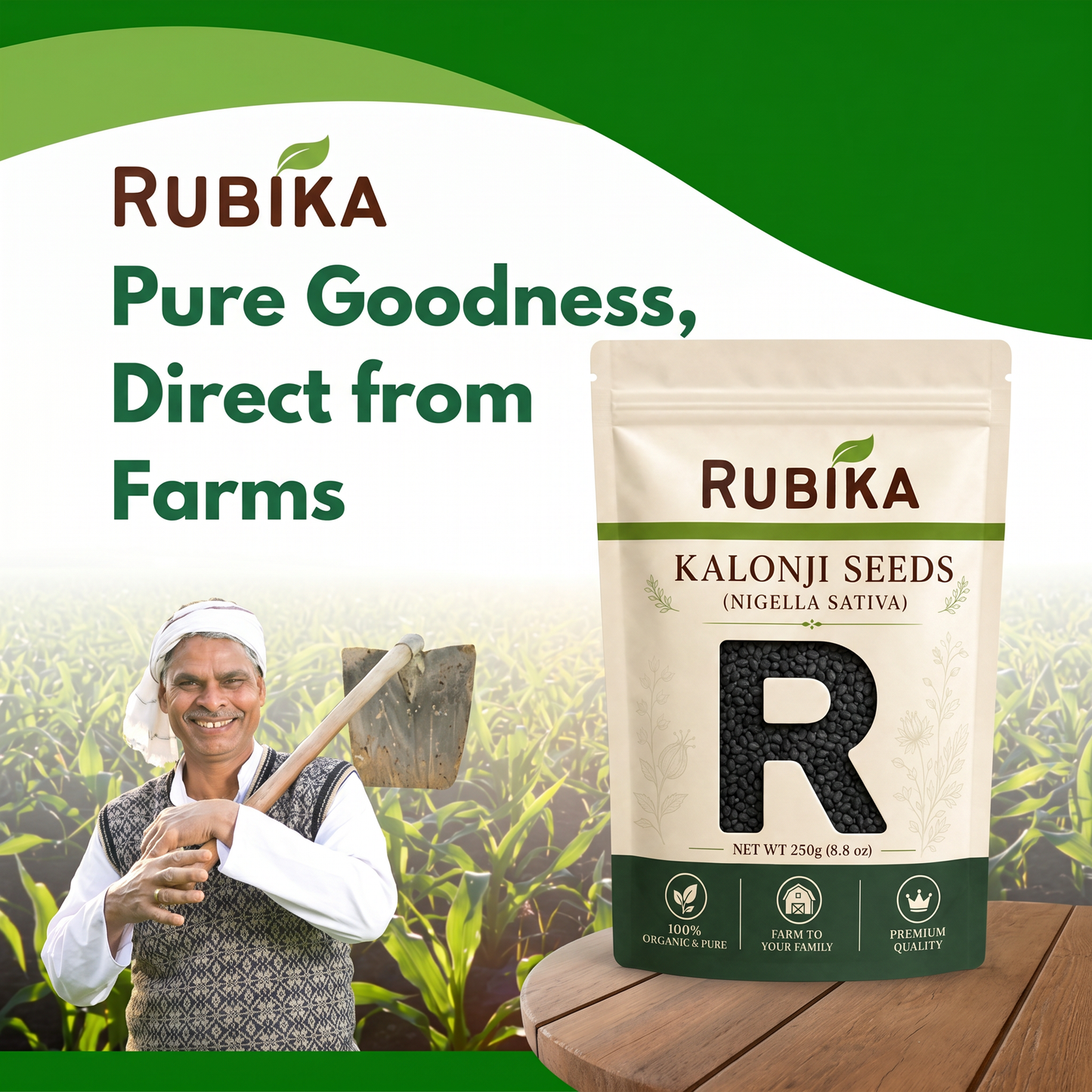
At Rubika Essential Store, we believe quality begins at the source. Our Farm to Family approach ensures that every batch of Kalonji Seeds is carefully sourced, hand-cleaned, quality checked, and hygienically packed in eco-friendly stand-up pouches to preserve freshness and natural aroma.
Whether you're seasoning vegetables, preparing pickles, baking naan, or making traditional homemade preparations, Rubika Kalonji Seeds deliver purity, freshness, and consistent quality.
Key Benefits
Proven Health Benefits of Kalonji Seeds in 2026
Naturally Rich in Antioxidants and Plant Nutrients
Scientific research has identified that kalonji seeds naturally contain beneficial plant compounds, including thymoquinone, alongside dietary fibre, healthy fats, plant protein, iron, calcium, magnesium, zinc, phosphorus, and potassium. Thymoquinone has been extensively studied for its antioxidant properties, while kalonji as a whole contributes valuable nutrients that complement a balanced diet. Current research is encouraging, although scientists continue to investigate its full range of health effects through larger human studies.
Traditionally Used in Ayurveda and Herbal Practices
Kalonji has been used for centuries in Ayurveda, Unani, and traditional herbal systems as a valued natural ingredient. It has historically been incorporated into daily wellness routines and culinary preparations across India, the Middle East, and North Africa. While traditional use reflects its long-standing importance, it should not be considered a substitute for professional medical advice or treatment.
A Versatile Ingredient Beyond the Kitchen
Today, kalonji seeds are appreciated not only for cooking but also for their role in homemade hair oils, herbal blends, and DIY beauty recipes. Many people prepare traditional hair oils by combining kalonji with coconut oil, amla, or fenugreek. Individual experiences vary, and while these practices are popular, no specific cosmetic or medical outcomes can be guaranteed.
Sources: Research on Nigella sativa and thymoquinone published in peer-reviewed journals indexed by the U.S. National Library of Medicine (PubMed) and reviews available through the National Institutes of Health (NIH).
How to Use
Effective Ways to Use Kalonji Seeds for Your Needs
Add Rich Flavour to Everyday Cooking
Kalonji seeds are widely used as a seasoning in Indian and international cuisines. Their slightly peppery, earthy flavour enhances curries, lentils, vegetable dishes, rice preparations, breads, and savoury snacks. Just a small quantity is enough to add depth and aroma to your recipes.
Perfect for Pickles, Baking and Tempering
One of the most popular uses of kalonji is in homemade pickles, where it contributes a distinctive flavour. The seeds are also sprinkled over naan, kulcha, crackers, and bread before baking. During tempering (tadka), lightly heating kalonji in oil releases its characteristic aroma and enriches dals and vegetable dishes.
Traditional DIY Hair Care
Many households prepare homemade hair oils by gently heating kalonji seeds with coconut oil or blending them with herbs like amla and methi. Ground kalonji is also commonly included in homemade hair masks. These traditional preparations remain popular as part of natural hair care routines.
FAQs
How to Store Kalonji Seeds Correctly?
To maintain the natural aroma and quality of kalonji seeds, always store them in an airtight container after opening the pack. Keep the container in a cool, dry place away from direct sunlight and moisture. Using a clean, dry spoon every time you handle the seeds also helps prevent contamination and maintains freshness for longer. Proper storage protects the seeds from humidity and helps preserve their flavour over time.
FAQs About Kalonji Seeds
Are Kalonji Seeds the same as Black Cumin?
No. Kalonji (Nigella sativa) and Black Cumin (Bunium persicum) are two different plants. Although their names are sometimes confused, they differ in appearance, flavour, and botanical classification.
Are Kalonji Seeds the same as Black Sesame Seeds?
No. Black sesame seeds have a nutty taste and smooth texture, while kalonji seeds have a peppery, slightly bitter flavour and an angular shape. They are completely different ingredients.
How can I identify pure Kalonji Seeds?
Pure kalonji seeds are naturally matte black, angular in shape, and have a fresh, mildly peppery aroma. They should be free from dust, insects, stones, broken particles, or mixed seeds such as black sesame or ajwain.
What do Kalonji Seeds taste like?
Kalonji has a distinctive flavour that is mildly bitter, peppery, and earthy, with subtle notes similar to oregano and onion.
Why is Kalonji called Onion Seeds?
Kalonji is often referred to as "onion seeds" because its flavour has mild onion-like notes. However, it does not come from onions. It is the seed of the Nigella sativa plant.
Which is better: Kalonji Seeds or Kalonji Oil?
Both have different uses. Whole kalonji seeds are commonly used in cooking, baking, and traditional recipes, while kalonji oil is typically used in smaller quantities or for external applications. The better choice depends on how you plan to use it.
Which brand of Kalonji Seeds is best?
Look for a brand that offers premium-quality seeds, hygienic processing, transparent sourcing, and secure packaging. Rubika follows a Farm to Family approach, offering hand-cleaned, hygienically packed, premium-grade kalonji seeds in eco-friendly stand-up pouches.
Which time is best to eat Kalonji Seeds?
There is no scientifically established best time to consume kalonji seeds. They can be included in meals according to your dietary preferences and cooking style.
How to eat Kalonji Seeds daily?
Kalonji seeds can be used in curries, dals, pickles, breads, spice blends, salads, and tempering. They are a versatile culinary spice that easily fits into everyday recipes.
How much Kalonji Seeds should I take daily?
There is no universally recommended daily intake for kalonji seeds. If you plan to consume them regularly for specific health reasons or alongside medications, it is advisable to consult a qualified healthcare professional.
What are the other names of Kalonji Seeds?
Kalonji is also known as Nigella Seeds, Nigella sativa, Black Seeds, Black Caraway (in some regions), and Mangraila in Hindi.
Are Kalonji Seeds naturally black?
Yes. Mature kalonji seeds are naturally matte black with an angular shape and a characteristic peppery aroma.
Other Information
Country of Origin - India
Manufactured & Marketed by - Rubika Essential Store
Address - Shop No.113, Prakash Nagar, Mahim Police Colony, Near S.L Raheja Hospital, Mahim (W), Mumbai - 400016
Customer Care - rubikaessential@gmail.com / 9029441153